

Variable rate Fertilizing
Oilseed Rape spring regeneration

The agronomist decides, the map delivers
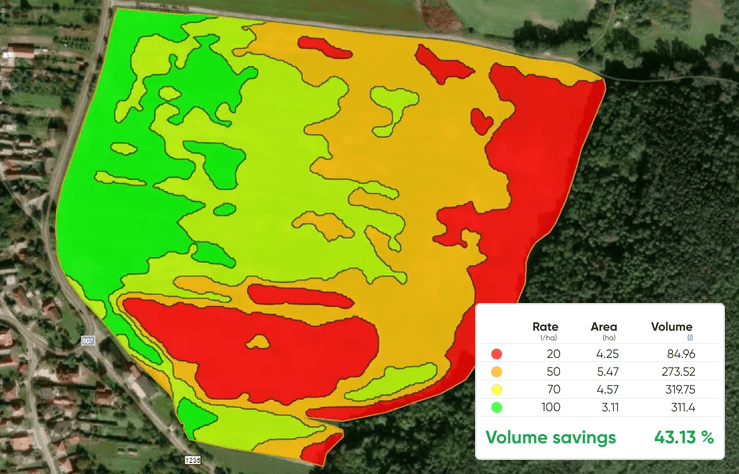
This field came out of winter uneven. Some zones were strong and dense, others thin and slow. One flat urea rate would have fed them all the same, and most of them wrong.
An NDVI map split this 17.4-hectare field into four zones by biomass, and the agronomist made the call from there. The weak red zones had come through winter badly, damaged enough that extra nitrogen would not turn into yield anymore. So he lowered the dose there instead of chasing a lost cause, and put the fertilizer where the crop could still use it: the strong green zones got more urea to carry their growth through spring.
His goal was simple: not a kilo of fertilizer wasted on spots that will not give it back. The saving came with the decision, 43.13% less urea than a flat rate, worth €19.74 per hectare, applied by the FendtOne terminal in 1-metre sections.
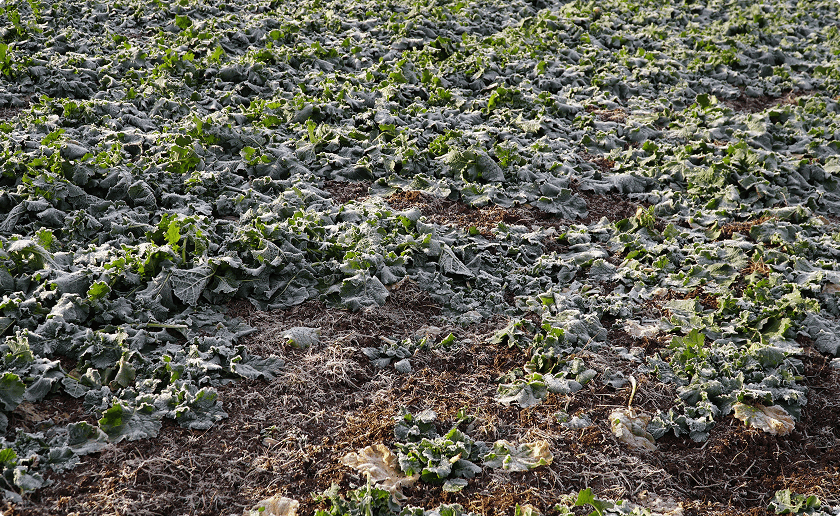
Fertilizer where it still turns into yield, 43.13% less urea, and €19.74/ha saved.