
Why Harper Adams, and why does the UK need its own data?
UK farming is not mainland Europe. Different crop rotations, different weed species, different climate. CultiWise already works. The results from the first season at Harper Adams prove that. But the more UK field data it learns from, the sharper the detections get for UK conditions. That is what this project is about. Not waiting for it to work. Making something that already works, work even better for UK farmers.
All quotes below are from Edward Wardroper, CultiWise specialist at Tallis Amos.
What did the first fields show?
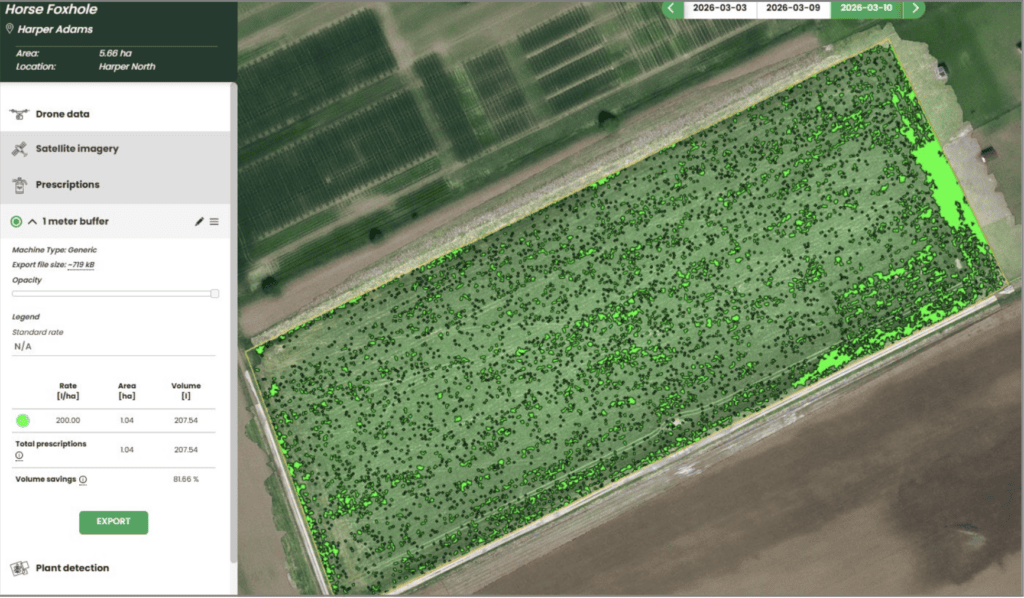
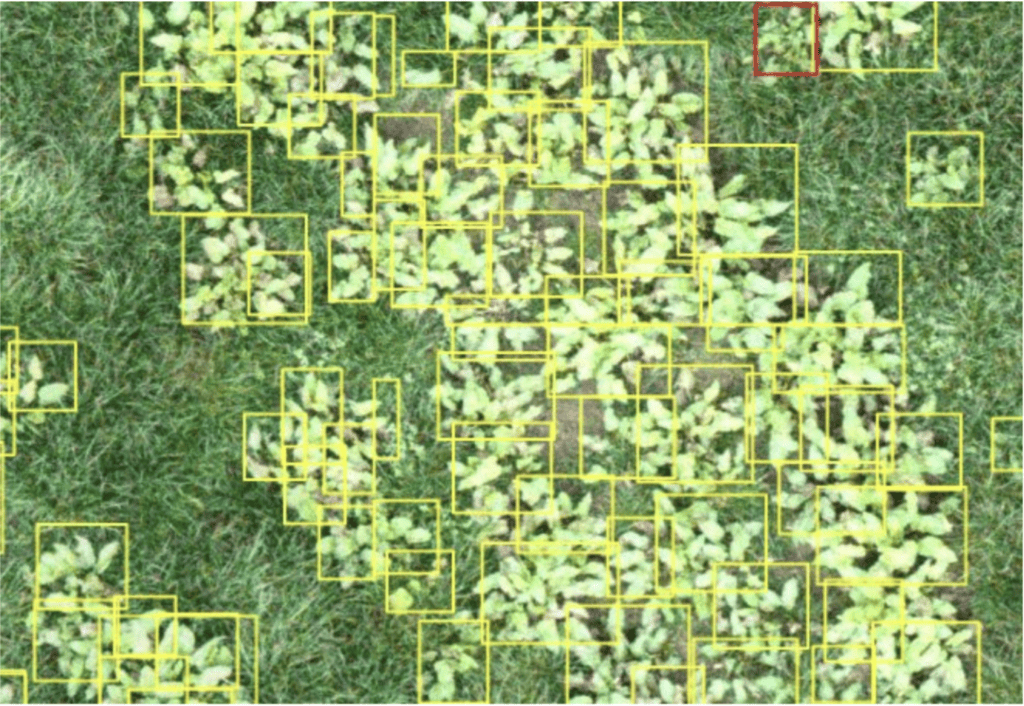
75% predicted herbicide saving on volunteer beans in winter wheat. 81% on docks in a grass field. Both green on green situations, both from the first season at Harper Adams.
“It was impressive how well the docks were picked up in the grass and the bean volunteers in the wheat, especially since they were both dealing with green on green weed situations in developed crops.”
The dock result is the one that matters most in UK grass farming. A lot of grass fields here are grown with a clover ley, which limits the chemistry you can use. Blanket spray and you take the clover with it. With CultiWise you spot-spray the docks and the clover survives. And because docks are patchy (heavy in some areas, light in others), the savings add up fast.

What else did the AI pick up?
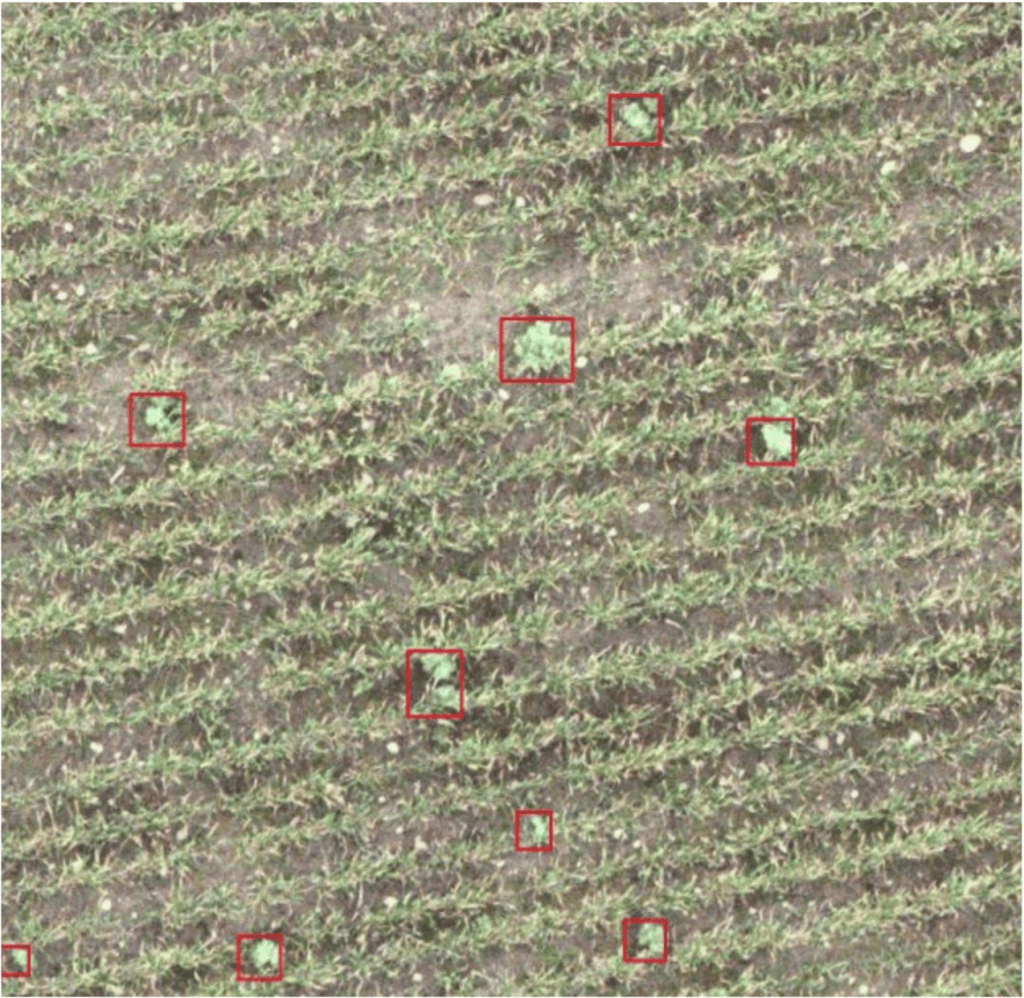
Last week I flew a field with ryegrass in winter wheat. Two grasses, same growth stage. The AI picked it out on a slight colour difference.
“I was especially impressed with this, as it was a grass weed in a grass. Before this, I would have thought that it would not pick it up.”
That’s green on green in its hardest form, and it worked. Right now, in UK fields, in UK crops.
Does it work with a John Deere sprayer?
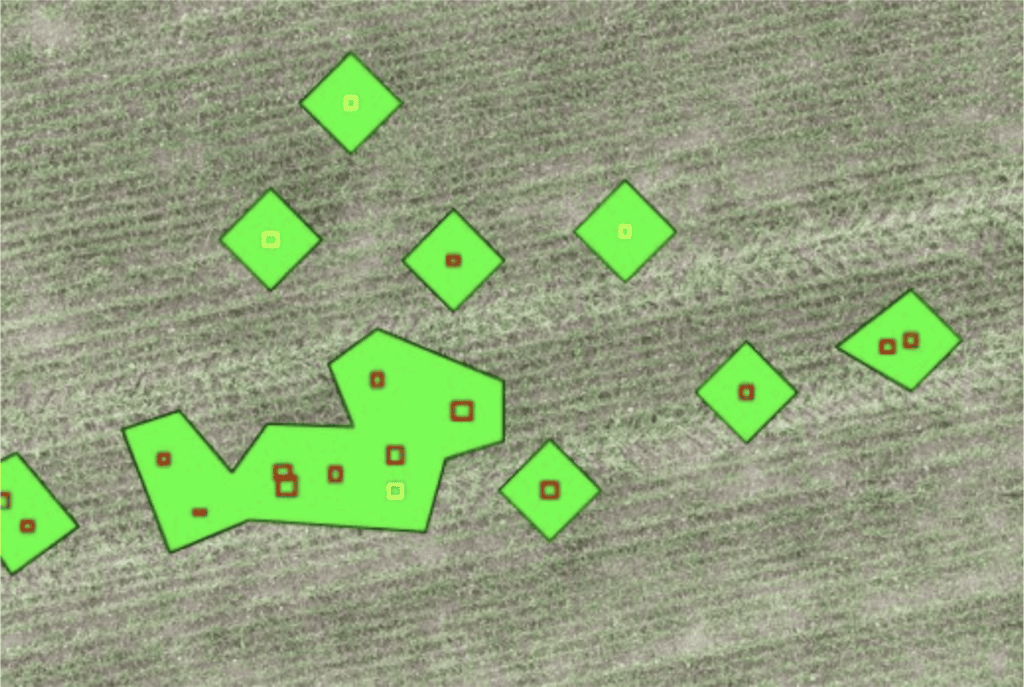
Yes, and that was one of the things Edward wanted to prove with the spot spray trial at Harper Adams. He set up mats across the field with water-sensitive paper on each one, built a spray map in CultiWise for half the trial, ran a blanket application for the other half. The herbicide map exported straight into the John Deere.
“The nozzles switched on and off and worked effectively. Even when increasing the speed on the sprayer for the second and third runs, it still hit the target.”
No manual steps, no conversion, no fuss. Map out of CultiWise, straight into the machine.

What does the drone give you that walking the field doesn’t?
Crop walking gives you an approximation. You cover a path and build a picture from that. The drone covers everything. The whole field, in one flight. CultiWise takes that imagery and turns it into a herbicide map you can actually use.
“I still walk the field before flying. It helps to know the species and growth stage. But the drone gives you the distribution. And the map.”
Drone imagery gets down to 35 mm per pixel. You can see individual plants. Satellite sits at 3 m per pixel, and by the time you have access to it, it can be days or weeks old. For spotting weeds, those two things are not even close.
What’s it like to use CultiWise day to day?
Edward’s verdict after the first season: easy to use, with guided modes that walk you through each step. The drone mission planning feature is worth calling out specifically. You pick green on green or green on brown, select the field, choose the weed size, and CultiWise sets the flight height and speed. The operator no longer needs to know the exact parameters the drone should fly. CultiWise handles that. Less room for error, better data every time.
What are you working on next?
I’ve started imaging fodder beet, maize, and potatoes weekly as they emerge. Row crops are new ground, and I want to know how early CultiWise can detect in those conditions. I’m also planning to test the plant-count feature.
The results are already there. This is about building the full picture, crop by crop, field by field, so UK farmers know exactly where CultiWise gives them the biggest return.
The work at Harper Adams is ongoing. If you farm in the UK and want to see what your fields look like through CultiWise, the first 15 hectares are free. Email the TAG TECH Team on cultiwise@tallisamos.co.uk or call +44 7507 671287.