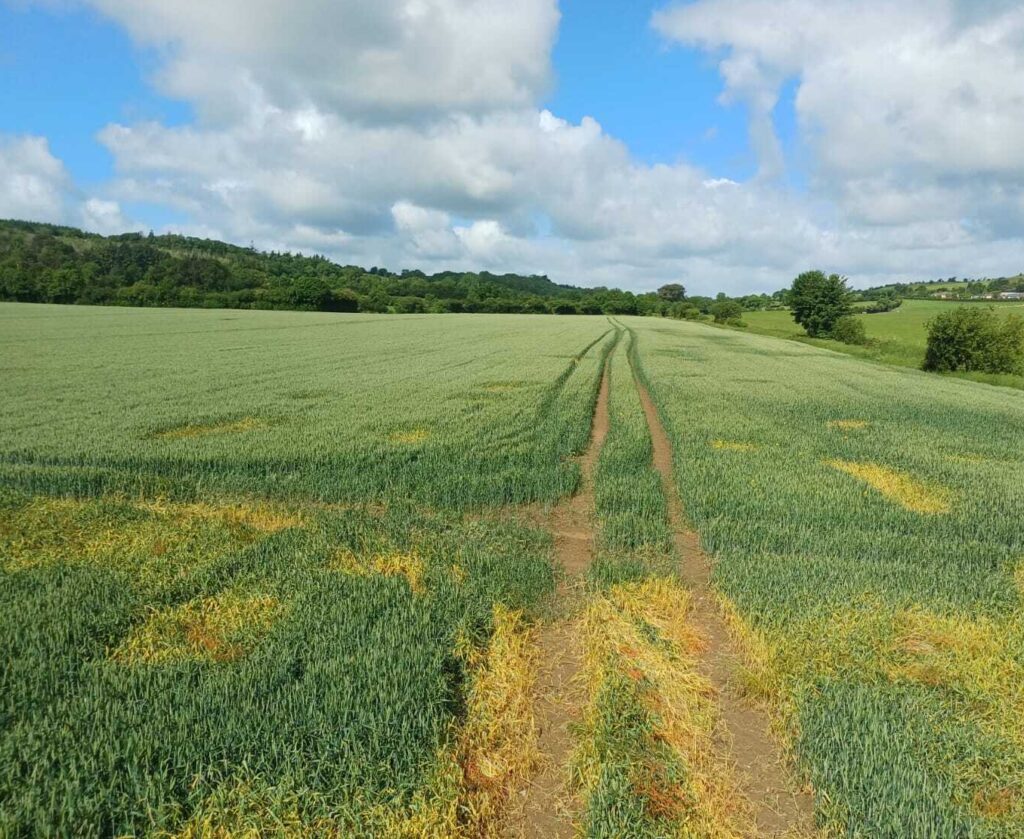
The reason was Italian ryegrass on his headlands. Not a few stray plants, but a resistant population that had already survived multiple herbicide applications. Every selective product James could legally put on a wheat crop had been thrown at it, and it kept coming.
When a grass weed shrugs off the chemistry like that, you’re down to one product: glyphosate. And glyphosate doesn’t choose. It kills the ryegrass and the wheat around it. So the usual options were both bad. Spray every headland and write off a band of crop all the way round. Or do nothing and let a resistant grass set seed across the field.
There was a third way. Map the ryegrass, spray only where it actually is, and keep the wheat you sacrifice down to the patches that matter.
CultiWise mapped the patches from the drone data, and the prescription map turned them into spray zones. James treated less than one hectare out of 26 hectares of headland. The rest of the crop, left standing. Walk the field afterwards and you can pick out the targeted patches by eye, yellow and orange against the green.
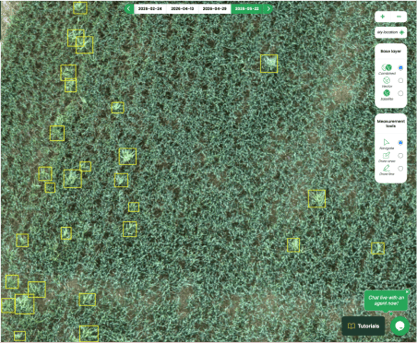
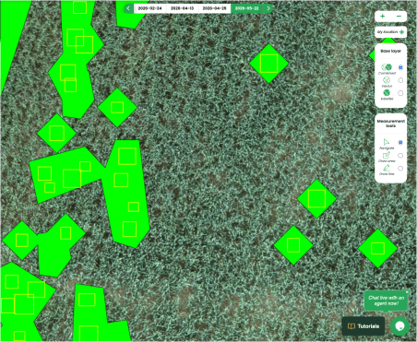
Two weeks on, the control came in at about 70%. In James’s words, more than acceptable.
That number is lower than the 98% he got on corn marigold, and it should be. This is a different fight. With a resistant grass on its last available chemistry, the target was never a clean field. It was seed.
“If the system achieves 70 to 80% control of ryegrass and prevents that proportion from returning seed, it would represent a very significant success. Preventing seed return is the key objective.”
A single resistant ryegrass plant sheds thousands of seeds. Stop most of that seed and you’ve stopped the problem from doubling next season. Let it drop and no amount of spraying buys it back.
The detection did its best work where it mattered most, on the dense patches and field corners that carry the most seed. The odd isolated plant gets missed, and that’s by design. Chasing every last one means a flood of false positives and wheat killed for nothing. Those stragglers get walked and hand-rogued off the headlands before they can seed.
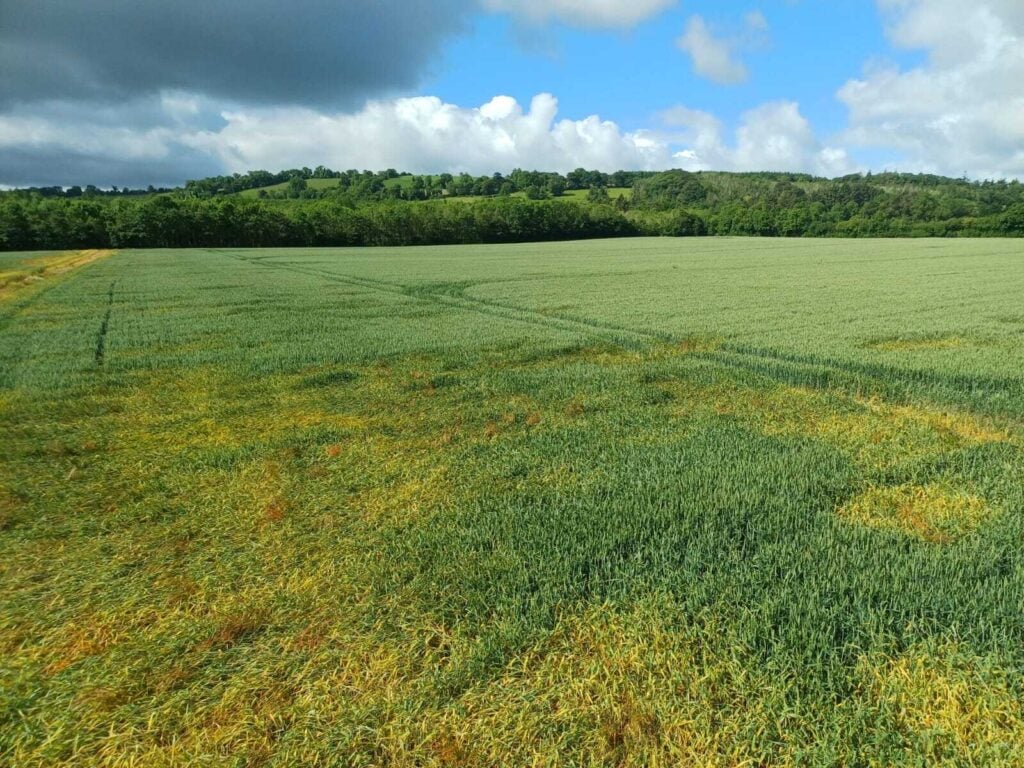

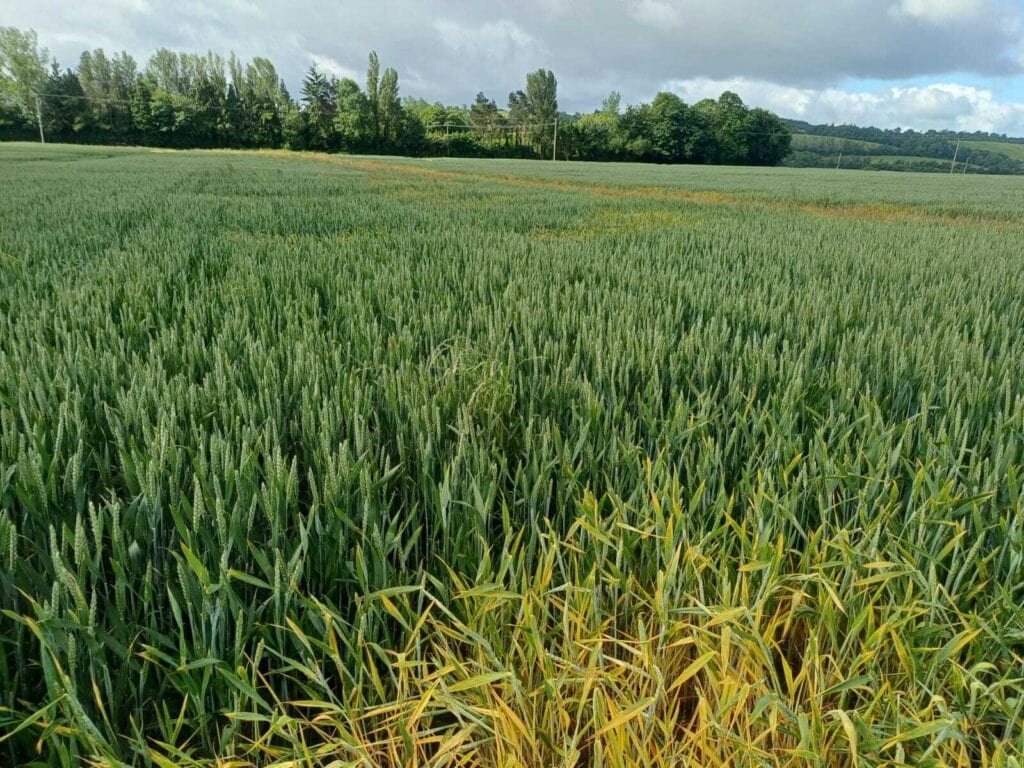
So James wrote off less than a hectare, aimed at the worst of it, and he’ll deal with the rest by hand. Against a headland of resistant grass for the next five seasons, that’s a cheap price. Sometimes the right move on a weed isn’t full control. It’s a small, deliberate loss now to stop a far bigger one later.
See your own fields from above in CultiWise.