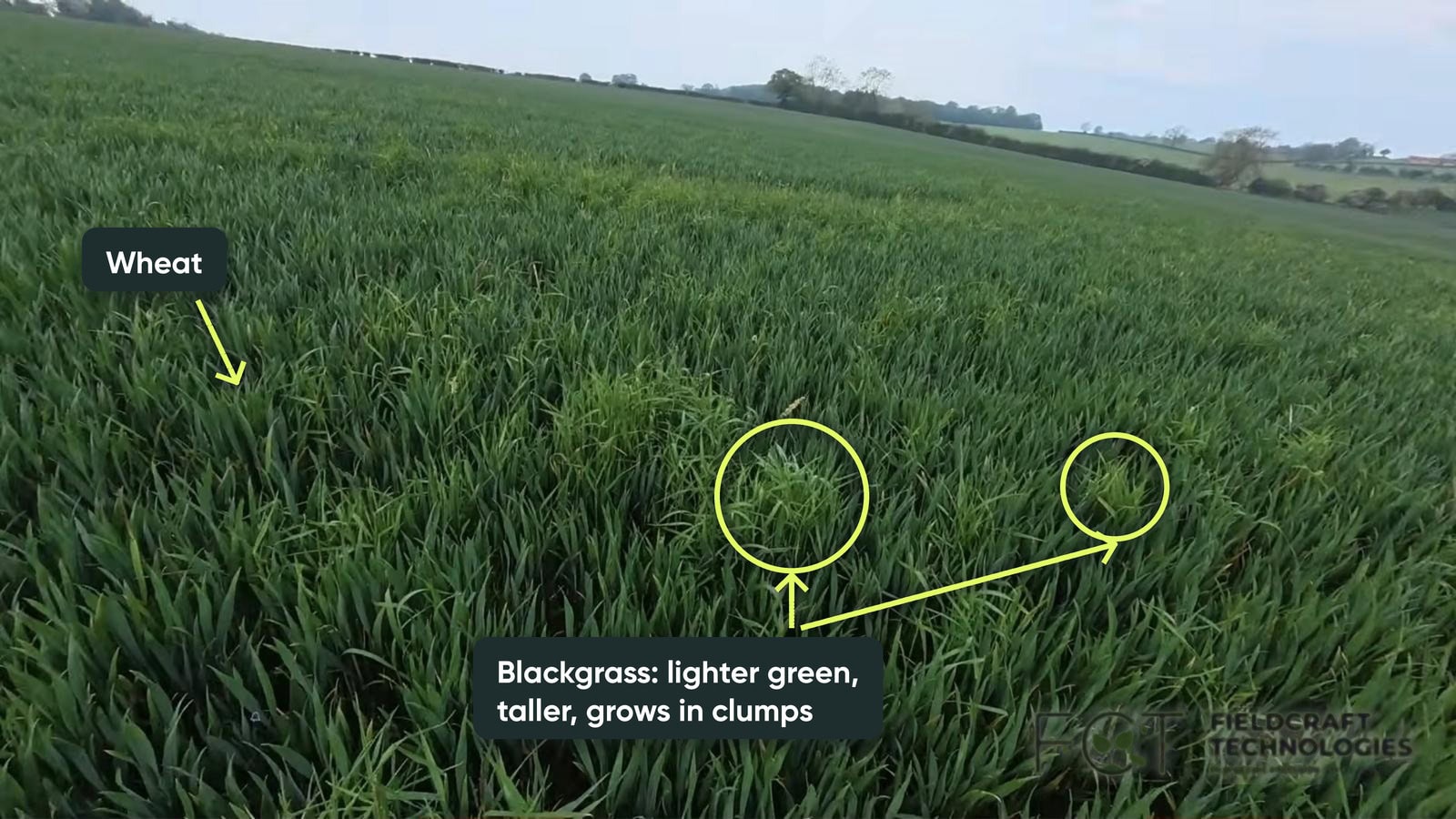
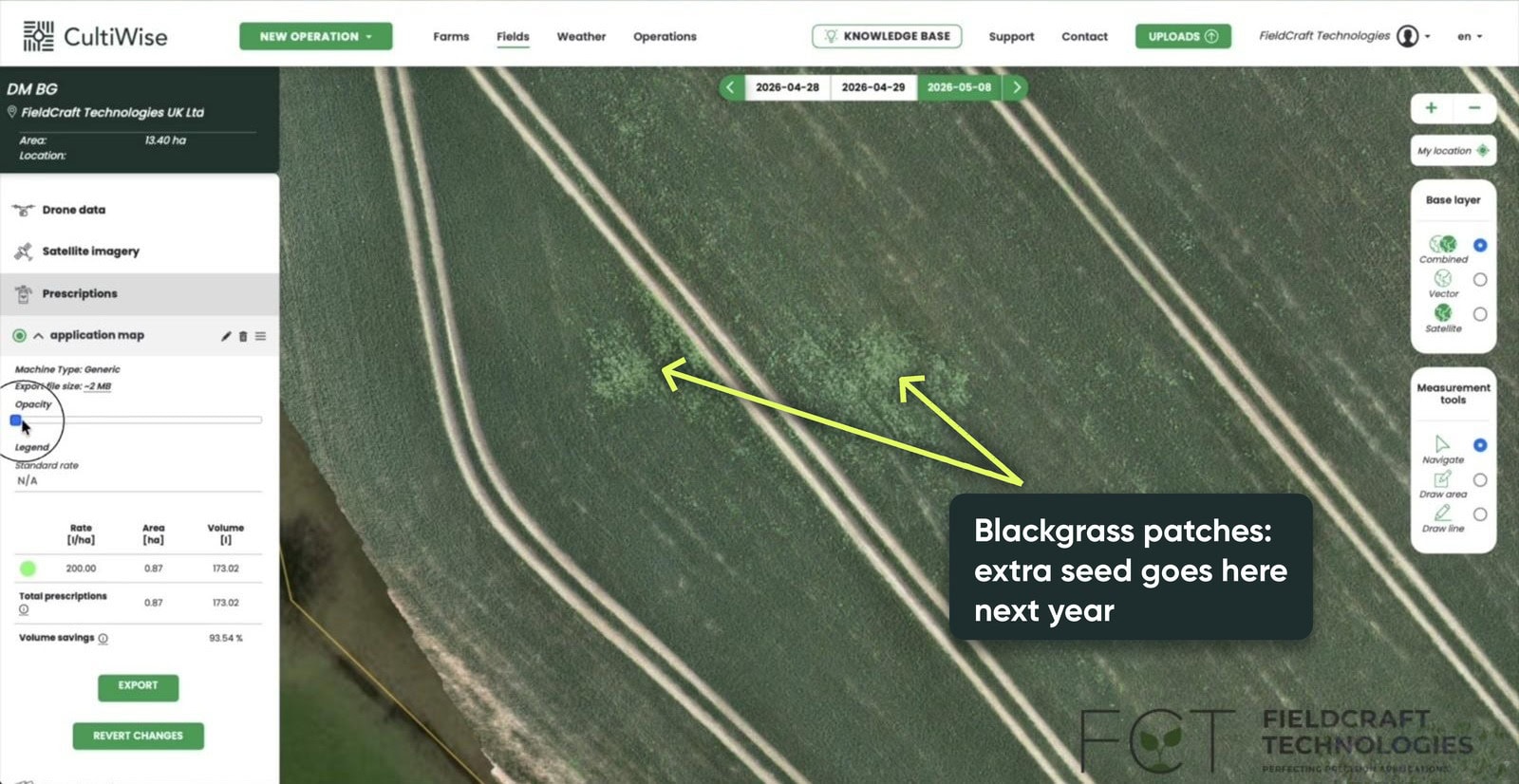
In the UK, blackgrass is one of the biggest weed problems a wheat grower can have. You see it from the edge of the field in May, lighter green and standing taller than the wheat, and you know what happens if it drops seed. You will be fighting it in that corner for years.
A grower near Grantham had a 13.4 hectare wheat field with patches like that. He wanted them gone before they seeded, and he chose glyphosate to do it. The catch is obvious. Glyphosate kills the wheat too. Spray the whole field and you lose the crop. Spray nothing and the blackgrass wins.
So he called Jack Harris.
Who is Jack
Jack has his own contracting business in the East of England, FieldCraft Technologies, and is one of our partners in the UK. He is a qualified agronomist, and part of his job is flying drones over farmers’ fields. On his website he puts it simply: spray the weed, not the field. He also films his work for his YouTube channel, Precision Farming Guy, and this field is in one of his videos.
Step one: a picture of every plant
Jack flew a drone with a good camera over the whole field. In about an hour it photographed every square metre, close enough to see single plants.
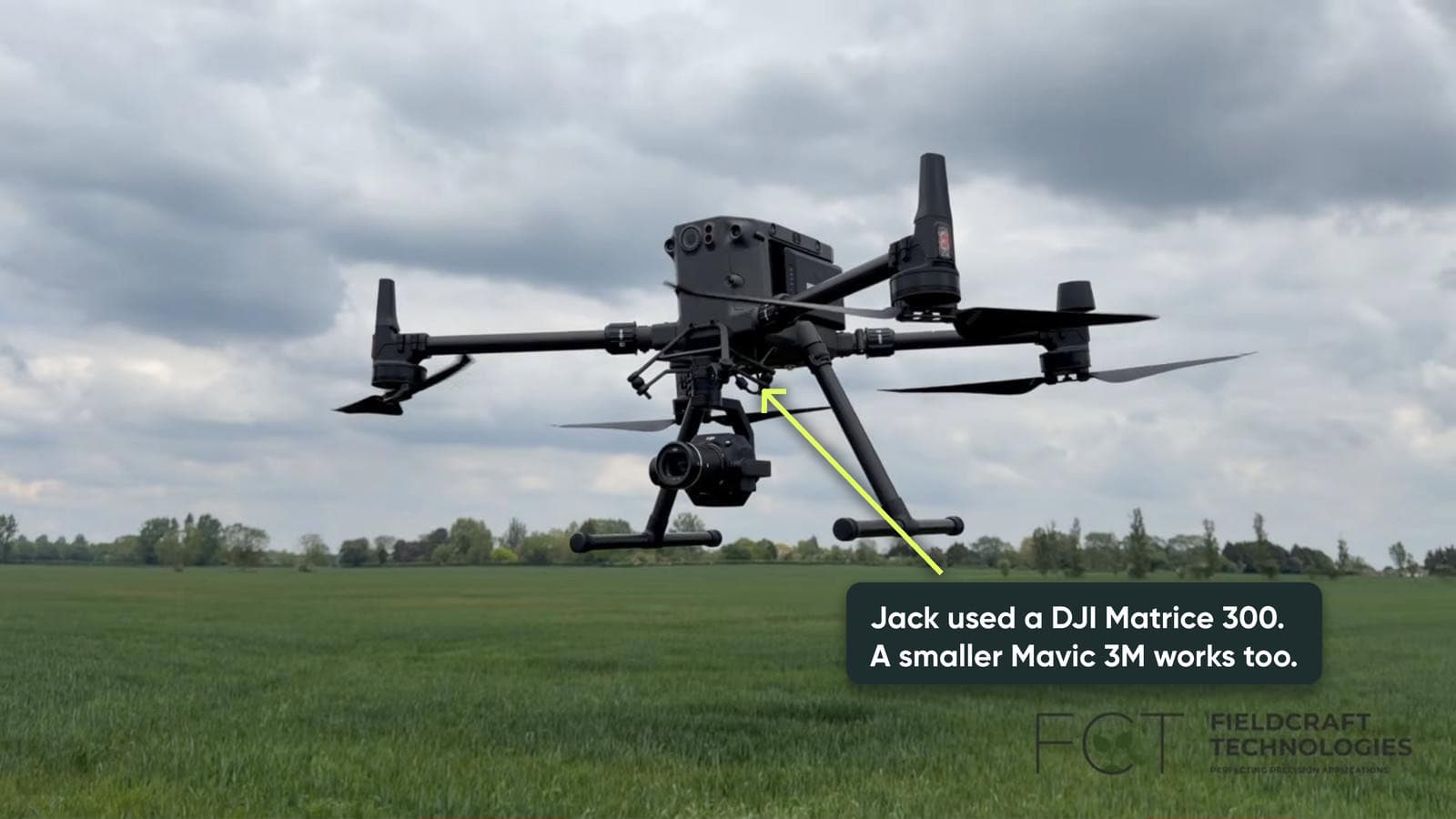
Jack used a big drone, a DJI Matrice 300, but you don’t need one that size. A smaller drone like the DJI Mavic 3M can do the same job. It just might take a little longer.
Jack uploaded the photos to CultiWise, which put them together into one map of the field. Then he showed CultiWise what blackgrass looks like in that field. He marked a few plants by hand, and CultiWise learned to find the rest on its own.
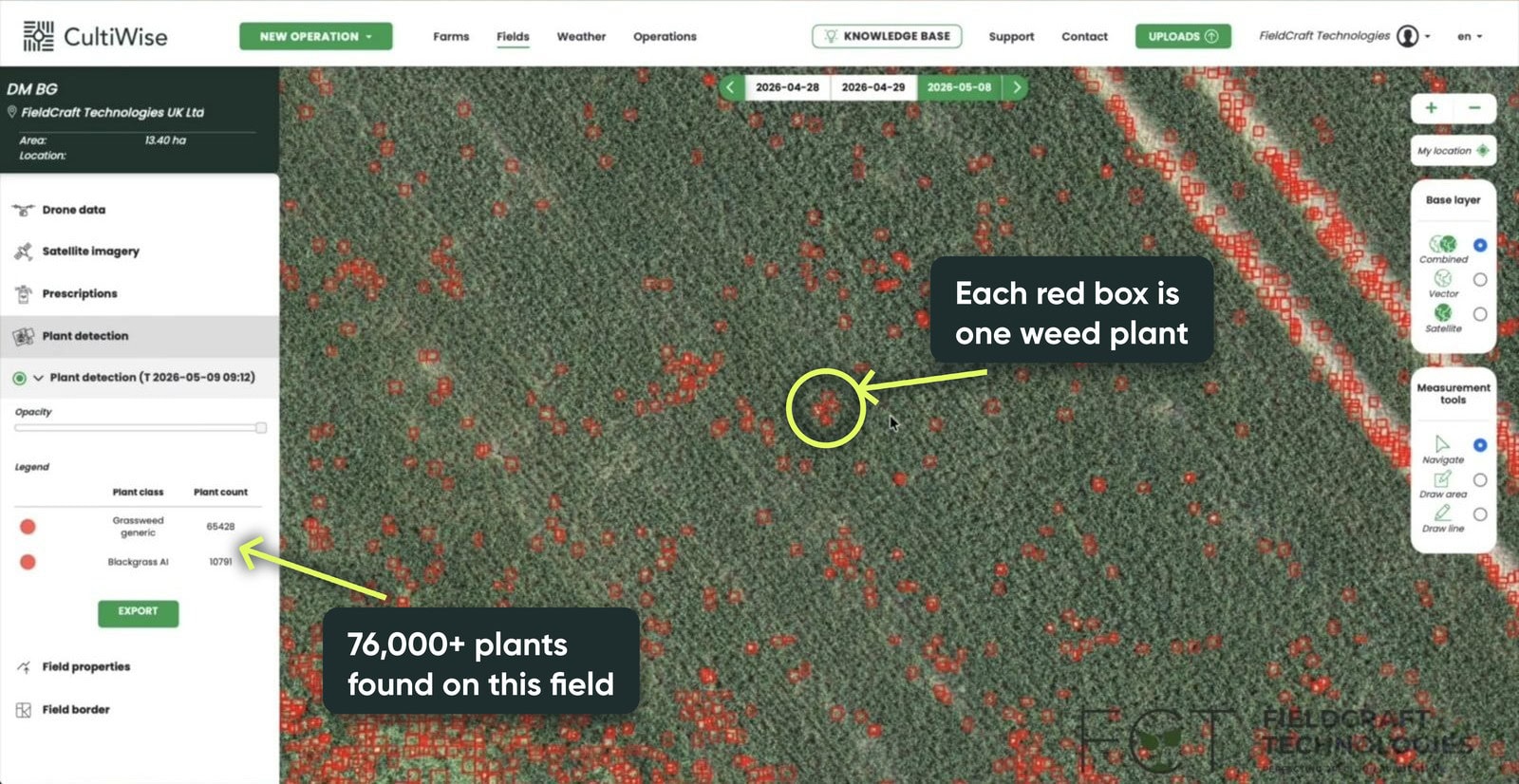
It found more than 76,000 grass weed plants. Every one is marked with a red box on the map.
Step two: the farmer decides
76,000 plants is a lot. Jack put it plainly in the video:
“Obviously it’d be nice to kill all the blackgrass, but if we did that, half of his field would be gone.”
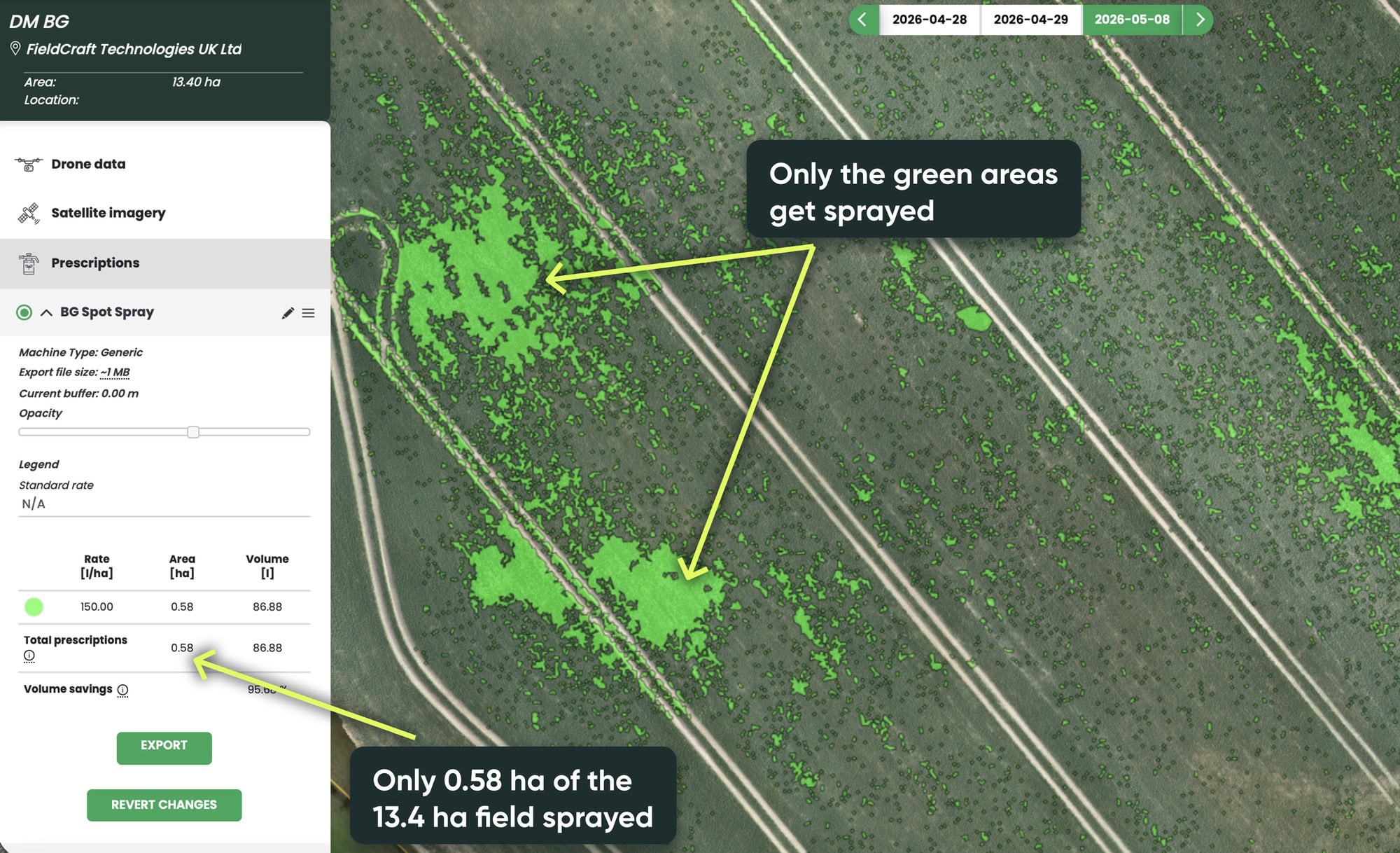
So Jack and the grower went through the map together. They kept only the thick patches, the ones that would drop the most seed, and left the scattered single plants for another time. That came to 0.58 hectares, about 4% of the field.
“He can decide what he wants to spray and what he doesn’t. His decision.”
That is how we built CultiWise. It shows you what is out there. You make the call.
Step three: the sprayer does the rest
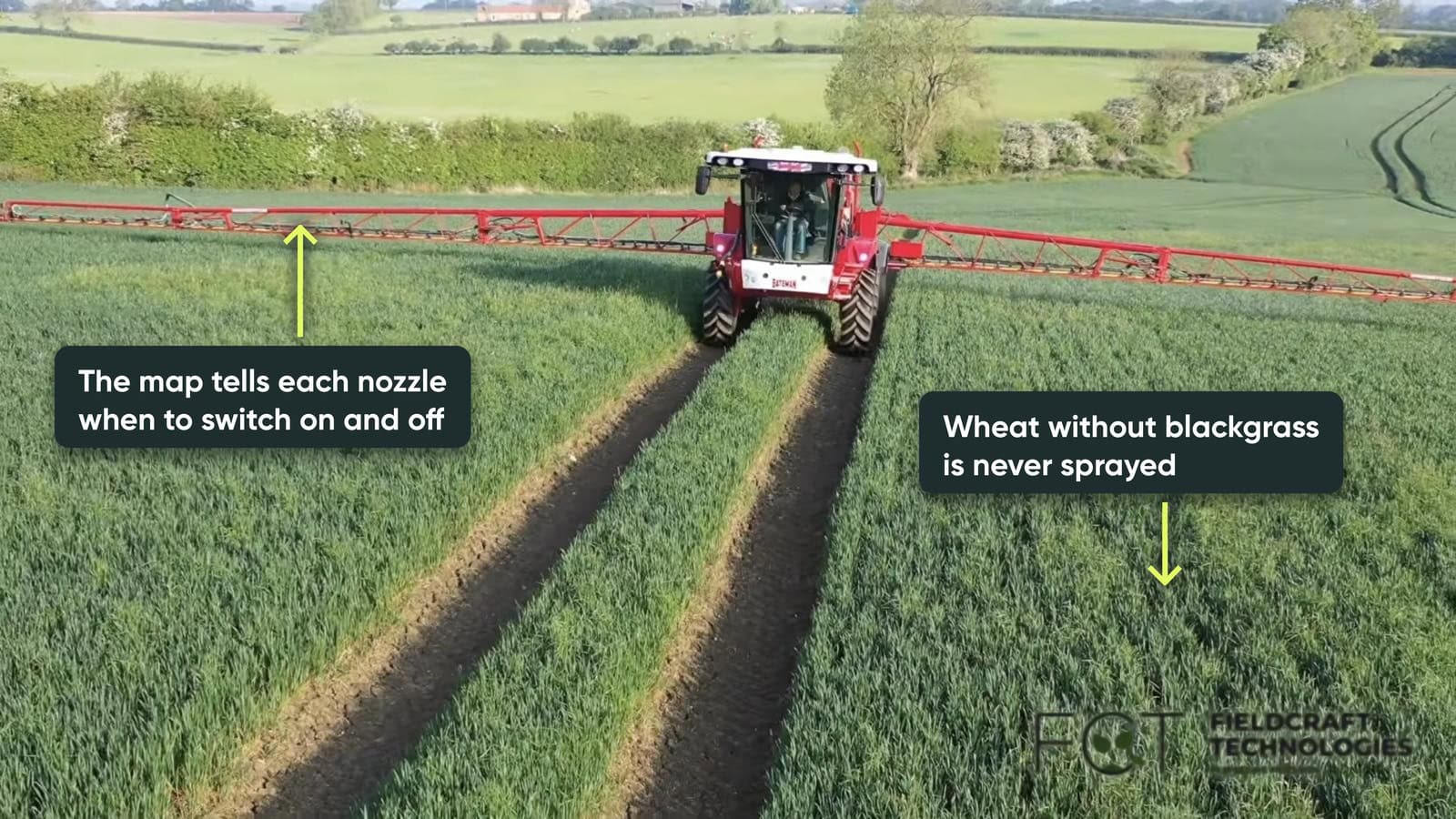
CultiWise turned those patches into a spray map, a file the sprayer can read. The grower’s sprayer can switch each nozzle on and off, and thanks to the map it knows exactly when and where to do it. The operator drove the field as usual, and the nozzles only opened over the blackgrass. Everywhere else, they stayed shut.
Before any glyphosate went in, Jack ran the sprayer with plain water to check the nozzles switched in the right places.
What the grower got
The wheat inside those small patches went with the blackgrass. He knew that from the start. But that was 0.58 hectares, about 4% of the field. The other 12.8 hectares were never touched.
Nobody sprays glyphosate over a whole wheat field, so the win here is not a smaller chemical bill. It is the crop he kept, and the blackgrass seed that never reached the ground.
He prefers to stay anonymous, but his verdict came through Jack: very happy with the results.
More seed where the blackgrass was
The map does not get thrown away. Jack is now using it to plan the seed rate for the next crop: more seed where the blackgrass was thick, so the wheat crowds it out, and the normal rate everywhere else. One drone flight, two jobs done.
Blackgrass is one of the hard ones
Blackgrass in wheat is one of the hardest jobs for a drone. It is a grass in a grass crop, so from above the two look almost the same.
Timing makes or breaks it. Jack flew in early May, when the blackgrass stood taller and lighter than the wheat. Fly too early and it hides in the crop.
Most weeds are easier. In Jack’s next field, the thistles stood well above the low spring barley and were easy to see.
Call a contractor, or do it yourself
Jack is a pro who knows the drone and CultiWise inside out. And he did not stop at the spray map. He is already turning the same blackgrass map into a seed plan for the next crop, thinking a season ahead. If you want to see results on your own farm, call someone like him, the way this grower did.
If you want to spot spray every season, doing it yourself means you don’t depend on anyone. You fly on the day your crop is ready, and with blackgrass that timing matters most. Flying a mapping drone is easier to learn than it looks. Start with one field and an easier weed.
Try CultiWise for free on your own fields at portal.cultiwise.com. If you farm in the UK, you can also contact Jack at fieldcraft-tech.co.uk. To see this field from start to finish, watch his full video.