
A first season with CultiWise: what it brought, and what he learned along the way
Adrians Solovjevs farms 1,000 hectares in Latvia with twelve other people and about 1,200 bee colonies. Half the land is conventional, half organic. Winter wheat, winter oilseed rape, oats, barley, durum wheat, spelt, buckwheat, and nectar plants for the bees.
Heavy clay on the hillsides, wet peat in the low spots, pH of 5 in places, phosphorus low. Nothing about that farm is uniform, which is why his first-season numbers are worth reading: real fields, real savings, and the two calls he got wrong.Here is the conversation.
Where did you start?
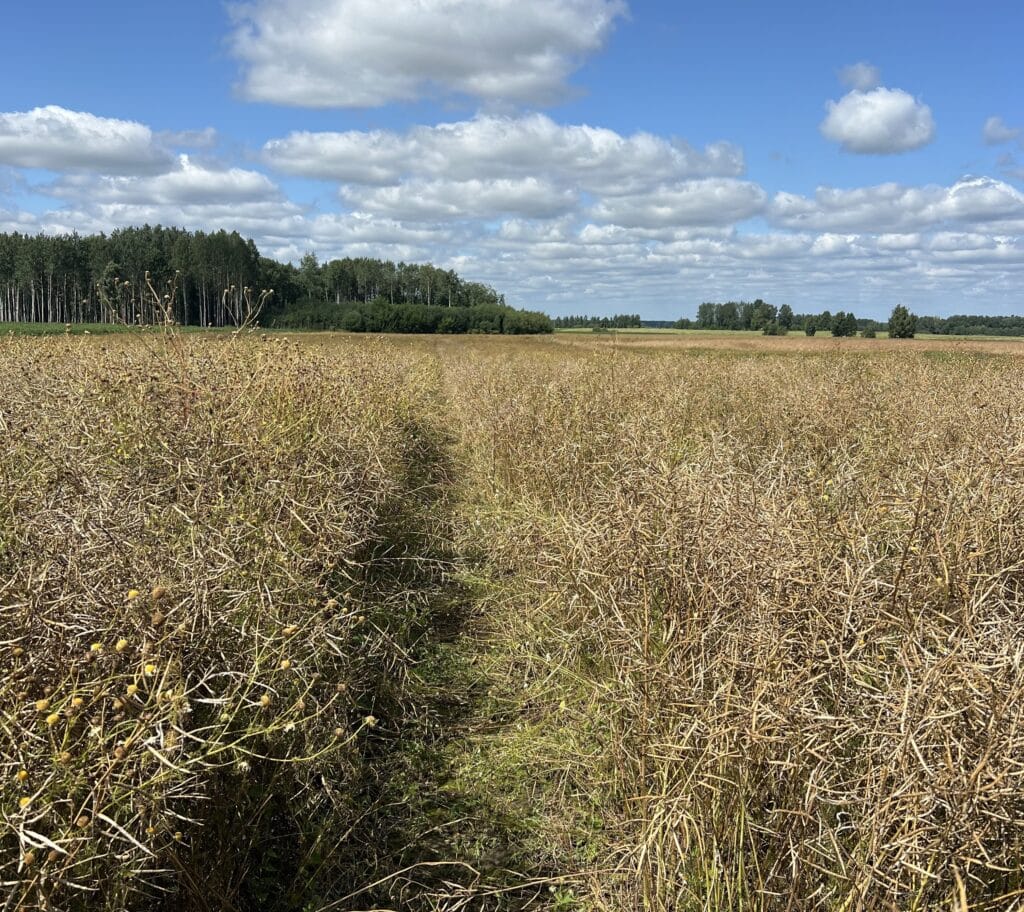
Field number 23. Winter oilseed rape, 8.87 hectares, and after winter almost half of it was gone or in poor condition.
I made a two zone map in CultiWise. Full rate where the rape survived, zero where it didn’t. That one application saved 50% of the fertilizer. A week later I did the same for fungicide with a three zone map and saved 50% there too.
I made one mistake, and the CultiWise team caught it. I set the empty zones to zero, but the sprayer needs at least 10 l/ha or it shuts off completely. Small thing, but good to know before you’re in the field.

What pushed you to try precision application?
A very bad start to the season. Last year was wet, so we seeded oilseed rape two weeks late. Then winter brought minus 30 degrees, and in spring huge amounts of water stood on the fields.
After wintering I saw a lot of places with no crop at all. With wheat you can still fight for a stand with extra nitrogen. With rape it’s the opposite, you just lose money feeding empty ground.
Input prices were the second push. Diesel and fertilizer went up hard, and I started thinking about how to use every kilogram of what I already had more precisely.

And across all your rape?
We have 103 hectares of winter oilseed rape. Between two fertilizer applications and one fungicide application we saved €5,484. That’s a quarter of what those three passes would have cost.
103 ha
WINTER OILSEED RAPE
25%
PRODUCT SAVED
€5,484
KEPT IN THE BANK
You also used drones for weed control in wheat.
We mapped 85 hectares of winter wheat. To give you a feeling for the speed, one 3.3 hectare field took four minutes and seventeen seconds of flying and 139 pictures.
I uploaded the data to the CultiWise portal and ran plant detection, so I knew exactly how much weed I had and which species. Then the normal herbicide rate of 200 l/ha, a 1 meter buffer around each weed to play it safe, and an export for our Amazone sprayer.
On that field the map came back with 1.32 hectares to spray out of 3.3. Across the whole 85 hectares we used 62% less herbicide, which is €1,350.
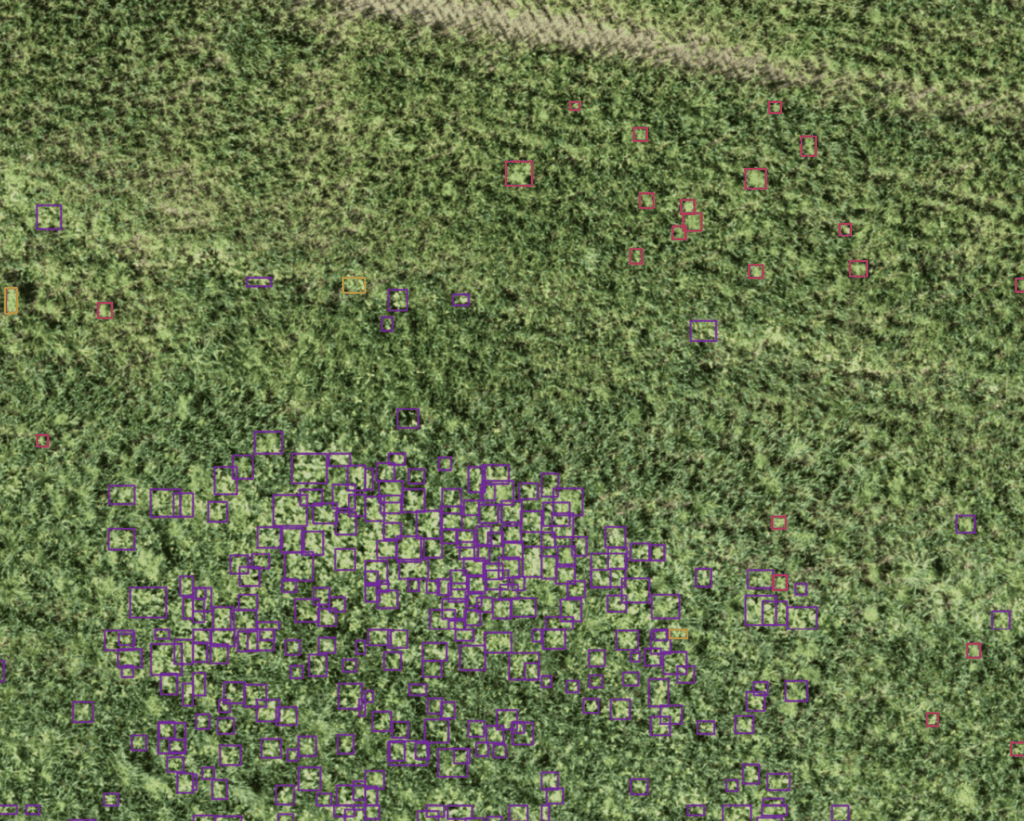
Every box is one weed the detection found
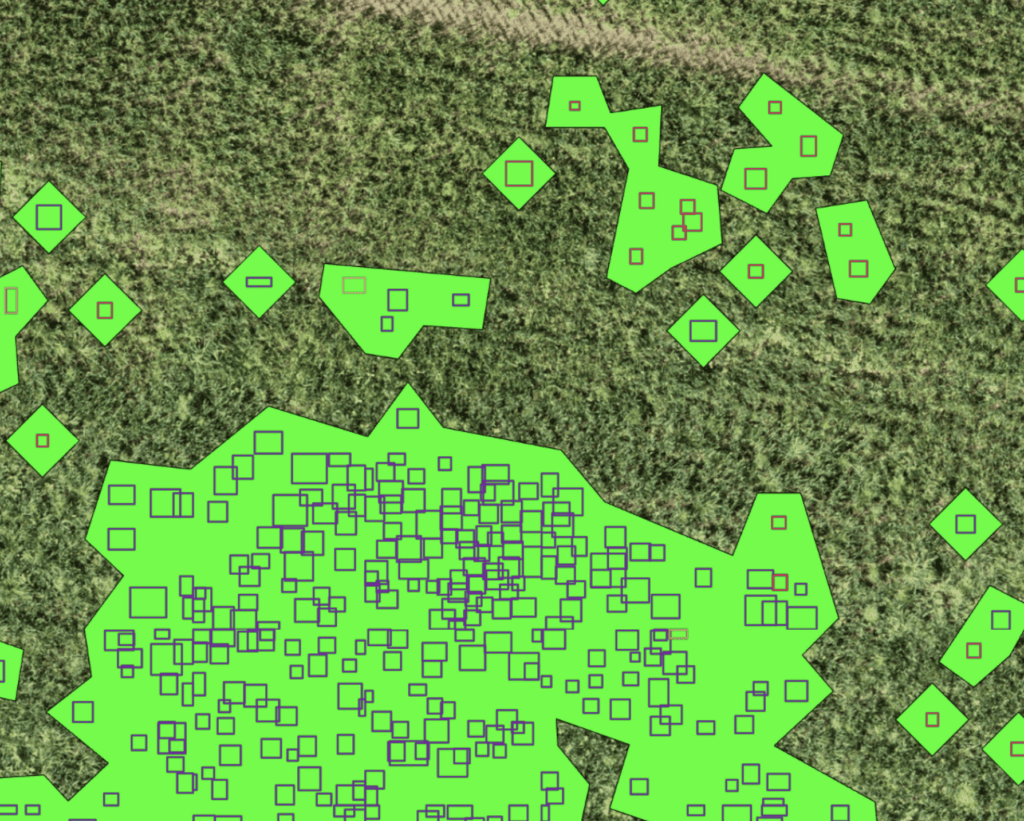
The same patch with a 1 meter buffer around each weed

Green is what gets sprayed, 1.32 hectares out of 3.3
Were you skeptical about the accuracy?
I was. In the beginning I walked into the fields with the map in my hand and checked it against the real situation. The accuracy just blew my mind.
My operator was skeptical too, so we did the first fields together. Now I hand him a flash drive and I know he’ll do everything precisely. That trust took a few fields to build, and that’s normal.
Any problems along the way?
Two honest ones. The AmaPad 2 monitor started lagging with the SHP files and sometimes froze, so the operator had to restart it. Annoying, but we sprayed all 85 hectares.
The bigger one is internet. The files are heavy, and rural Latvia is not famous for upload speed. If you’re on a wireless connection, plan for that before the season, not during it.
You trained the detection algorithm yourself. Why?
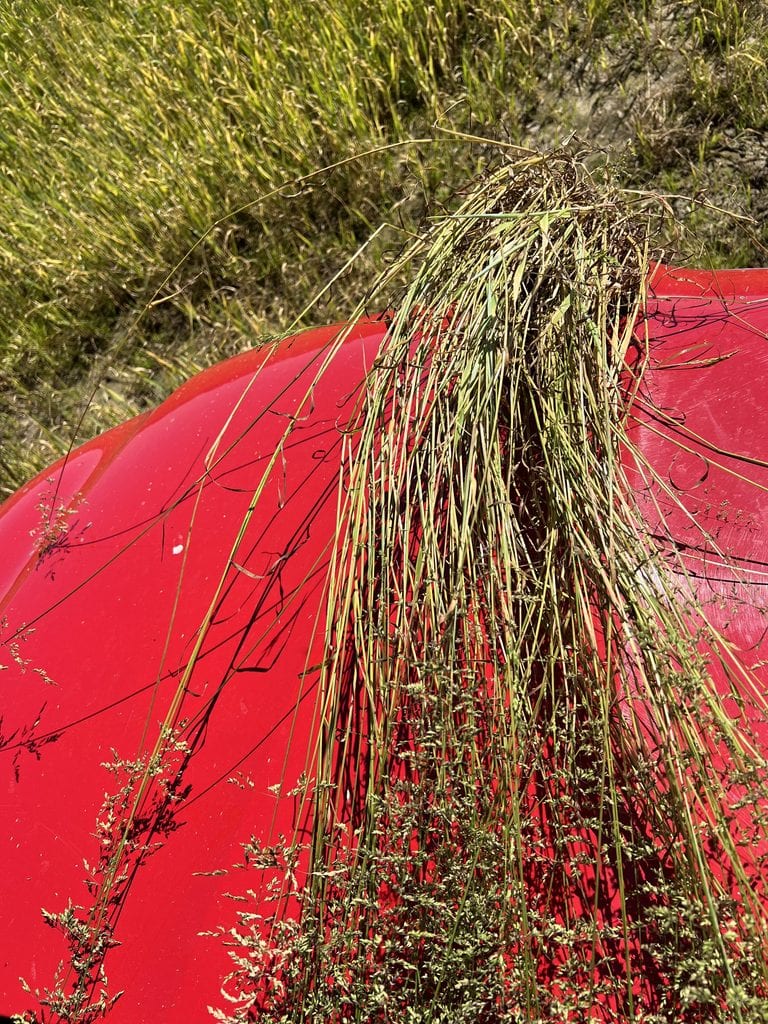
In one spring barley block I had wind grass. A grass weed in a grass crop is the hardest case for detection. The chemical that works this late is also expensive. So I trained the algorithm to find that one weed and nothing else.
On 10.74 hectares we saved 65% of the product. €345 in total, which is not a huge sum, but on chemistry that expensive, precision is the whole game. I walked the field afterwards and the precision was around 80 to 90%.


Let’s talk about the season total.
We used CultiWise on 744.74 hectares of applications this season and saved €12,958, which is 32% of what those inputs would have cost. In nitrogen alone that’s about 20 tonnes we didn’t buy.
And that’s only product. Machinery hours and man hours come on top, and I’ll add those up at the end of the season. Even without the final spreadsheet I can see how much more effective our operation became.

Did the savings cost you yield?
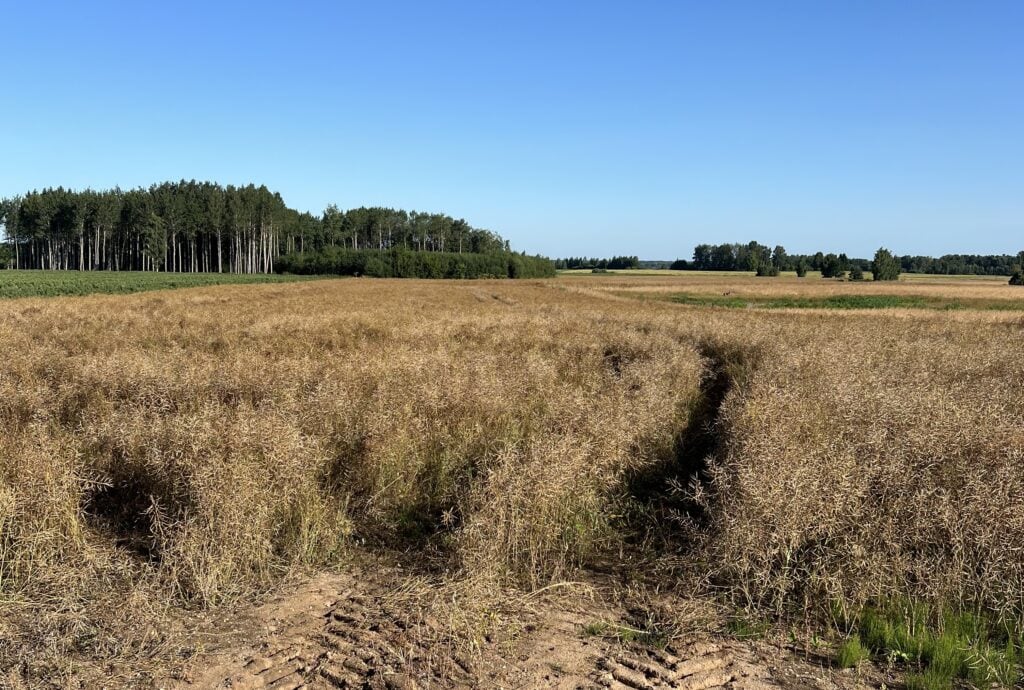
This is my favorite part. On our first combined rape field the winter damage was so bad that we cut nitrogen down to the level needed for a 1.2 t/ha yield. We didn’t want to spend on a field we’d almost written off.
It yielded 2.5 t/ha, and if I count only the areas that actually carried crop, 2.8. For our region that’s decent, and with the reduced costs behind it, I’m very happy.
And the fungicide you cut in half, did disease come back?
We didn’t have dry conditions this year, and even with that I don’t see a lot of area with diseases. So I am very happy with the results.
What would you do differently next season?
Three things. First, timing. With green on green spraying, go early. Small weeds mean cheaper chemicals and better results.
Second, sort out the internet before the season starts.
Third, trust the technology more. We had a spring oats field where the CultiWise potential map showed zones with more to give. The stand looked perfectly even to my eye, so I ignored the map and spread a flat nitrogen rate.
Then heavy wind and rain came, and the oats snapped exactly where the map had shown those zones. The map knew my field better than I did.


What’s your advice to a farmer thinking about starting?
Get everyone on board. You, your agronomist and your operator. If one of them doesn’t see the value, you won’t get good results.
And start with one field, like I did with field 23. Check the maps against reality with your own eyes. The trust comes fast after that.
That’s it. It’s this simple.
Adrians Solovjevs, agronomist, SIA Jaunā zeme